A stable harvest and high quality meet challenging conditions in the fruit cultivation sector
Consumer appreciation for home-grown products is a central concern – The Lake Constance region plays a key role in Germany’s domestic fruit supply – Fruchtwelt Bodensee addresses the industry’s questions about the future
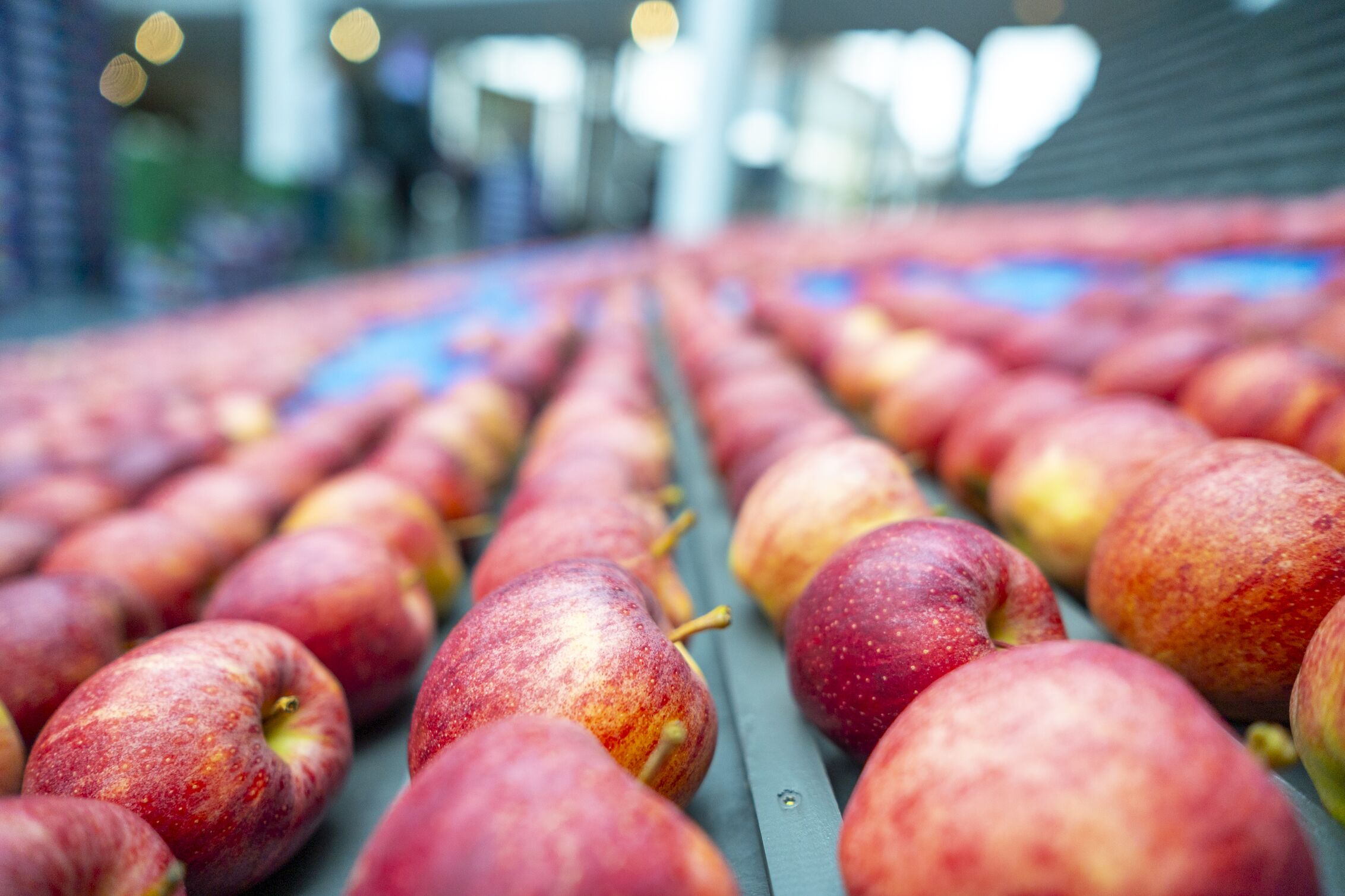
Friedrichshafen – The 2025 apple harvest in the Lake Constance region is characterized by premium quality and stable volumes. Germany’s second-largest growing region produces about 250,000 tons of table apples, just under a quarter of the country’s total fruit production of 1.07 million tons. In 2025, Europe grew some 10.9 million tons of table apples, slightly more than the year before. “Harvest quality is rated as very good across the industry – with high firmness, a balanced sugar-acid ratio, and excellent flavor,” reports the Managing Director of Fruit Region Lake Constance (Obstregion Bodensee), Anja Renz. Meanwhile, the framework conditions for fruit cultivation in Germany remain challenging. Anja Renz notes that farms are coming under pressure from rising production costs, stricter regulatory demands, and climate-related risks. From February 20 to 22, 2026, Fruchtwelt Bodensee will bring together key stakeholders from production, trade, and the spheres of policy and science to develop practical solutions at Messe Friedrichshafen.
A challenging environment for fruit cultivation
“Open borders mean our products ultimately compete on price across Europe and around the world. However, hourly wages vary considerably in our labor-intensive industry,” explains Obstregion Bodensee Chair Thomas Heilig, who is calling for viable political solutions such as industry-specific special regulations. Anja Renz also sees a need to take action on value creation: “Greater participation by producers in retail prices could be a big help in coping with rising production costs.” She also calls for a level playing field by ensuring that uniform European standards are applied to imported goods, which would bolster domestic fruit production. Equally important are more flexible approval procedures for crop-protection products so that it is possible to respond more quickly to new pests. Thomas Heilig cites concrete support initiatives, including the FAIRDI sustainability initiative, which fosters the cultivation of new, resilient varieties, reduces the use of crop-protection products, and simultaneously aims to ensure fairer remuneration for producers.
Exploring potential solutions and strategies
In addition to production conditions, consumer behavior also affects the industry. “Per-capita consumption of dessert apples has declined noticeably in recent years, from around 16 kilograms to under 14 kilograms, while the proportion supplied by imports has risen,” says Anja Renz, outlining the current situation, which will also be addressed in the panel discussion at the opening of Fruchtwelt Bodensee.
The trade fair presentations on the new digital documentation requirement, set to take effect in 2027, are practical in nature. “It definitely makes sense to engage with it now, because if used correctly, a digital field-record system delivers benefits such as resource optimization, detailed analysis, and improved farm management. Ultimately, being able to evaluate your analysis values at the push of a button saves time,” says Jürgen Sittner, representing the Lake Constance District Office. Four field-record systems that meet these requirements will be presented on the Sunday of the trade fair. Another challenge for fruit growing is climate change, which is making needs-based water supply increasingly important. On the Saturday of the trade fair, the KOB highlights the latest developments in a full series of lectures.
Creating value from traditional meadow orchards in a shifting market environment
By reimagining fruit spirits, small-scale and artisanal fruit distillers are countering the growing reluctance to consume alcohol. “We aim to demonstrate that our high-quality, locally sourced products from traditional meadow orchards are versatile and fit seamlessly into modern drinking culture,” emphasizes State Chair of the Association of Small-Scale and Fruit Distillers of South Württemberg-Hohenzollern Andreas Metzler, adding: “At the trade fair, our presentations demonstrate why our fruity distillates are a perfect flavor match for cocktails and how barrel aging elevates fruit brandies into premium offerings for cocktail bars.” He also calls for the alcohol tax to be raised to a contemporary level: “Low global prices for spirits encourage abuse and undermine the reputation of our products. This is especially relevant in light of the free trade agreement with India and Mercosur. At the very least, an inflation adjustment is urgently needed,” Andreas Metzler asserts.
Prices and opening hours
Fruchtwelt Bodensee will be open from February 20 to 22, 2026, from 9 am to 5 pm each day. Day tickets cost 23 euros but will also be available online for 19 euros. The ticket shop is already open. For further information and the detailed lecture schedule, visit www.fruchtwelt-bodensee.de or https://www.instagram.com/fruchtwelt.bodensee/
Press contact:
Kerstin Rieger, Manager of Media Relations
Tel.: +49 7541 708-327
E-mail: kerstin.rieger@messe-fn.de
About Fruchtwelt Bodensee
Fruchtwelt Bodensee is the international trade fair for commercial fruit production, distillation, and agricultural technology. Every two years, exhibitors from across Europe present the latest developments and products in fruit growing, distilling, harvesting machinery, crop protection, nurseries, agricultural technology, and agricultural trade. The exhibitors’ information and product offerings are complemented by the Lake Constance Fruit Growing Days’ wide-ranging, well-founded conference program on current topics from the worlds of practice and research. Moreover, the Lake Constance region – Germany’s second-largest fruit-cultivation area – provides ideal conditions for regional networking.
About Messe Friedrichshafen
Messe Friedrichshafen GmbH is one of Germany’s leading trade fair companies and is located at the scenic meeting point of four countries along the shores of Lake Constance. Founded in 1950 to bolster the region’s economy, it has made a name for itself worldwide as an organizer and marketer of leisure and trade exhibitions. Its extensive portfolio includes congresses, corporate and sporting events, television productions, and live concerts. Each year, Messe Friedrichshafen attracts hundreds of thousands of visitors and thousands of exhibiting companies from more than 100 countries to Lake Constance. With a total of 87,500 m² of exhibition space, the venue features twelve exhibition halls, two multifunctional foyers, and two outdoor areas in the inner courtyard measuring 15,500 m². Additionally, the Static Display area spans 20,000 m² and provides exceptional opportunities for engaging and dynamic trade fair experiences. The exhibition grounds, which are compact in design and include the Fair Lake adjacent to the airport as well as halls equipped with hangar doors, can accommodate a wide range of possible uses.
Download PDF
